
Overview
Which one did you catch?
If you're like us you have at some point caught a yellowfish and wondered which of the 7 different species it is. Not to mention the 3 similar species that add to the confusion. Searching online helped a lot but the info can be overwhelming and confusing sometimes.
In this guide we've tried to simplify the identification of yellowfish in South Africa by aggregating all the info we could find into one easy reference.
Species guide
Yellowfish species that occur in South Africa
There are only 7 true yellowfish (Labeobarbus) that occur in South Africa. Here they are, sorted by most commonly fished:
| Name | Other name | Location | Max size / length | SA record |
|---|---|---|---|---|
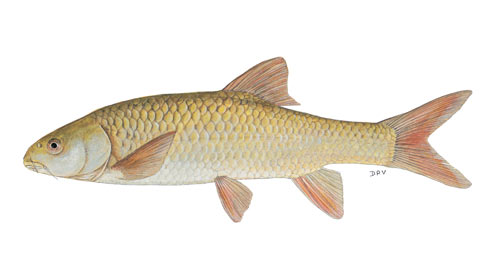 Smallmouth Yellowfish Smallmouth YellowfishLabeobarbus aeneus | — | Orange/Vaal River system (including Sterkfontein Dam), Gouritz (WC), Kei (EC), Great Fish (EC), Limpopo (LP), Pongola (MP) Rivers | 7kg / 50cm | 7.8kg |
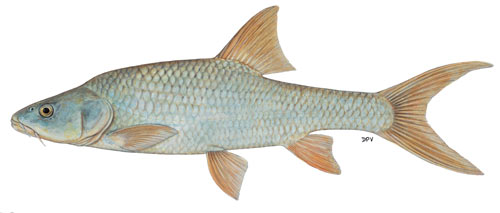 Largemouth Yellowfish Largemouth YellowfishLabeobarbus kimberleyensis | — | Orange/Vaal River system (including Sterkfontein Dam) | 22kg / 100cm | 9.5kg |
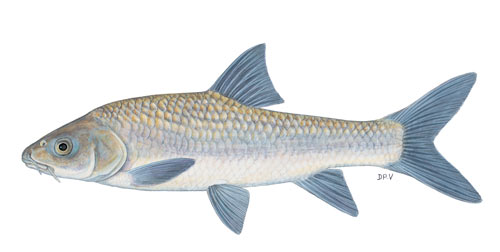 Bushveld Smallscale Yellowfish Bushveld Smallscale YellowfishLabeobarbus polylepis | — | Limpopo, Elands, Crocodile, Komati, Pongola Rivers — basically north and east of South Africa | 6.8kg / 46cm | 6.1kg |
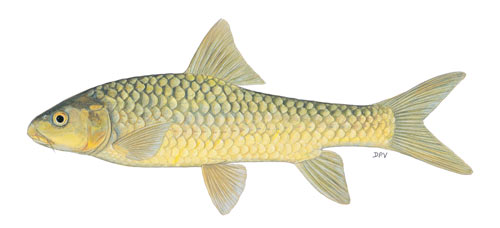 Lowveld Largescale Yellowfish Lowveld Largescale YellowfishLabeobarbus marequensis | — | Limpopo, Elands, Crocodile, Komati, Pongola Rivers — basically north and east of South Africa | 6kg / 47cm | 5.7kg |
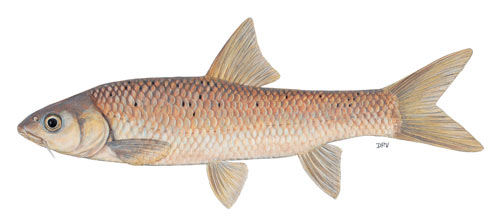 KwaZulu-Natal Yellowfish KwaZulu-Natal YellowfishLabeobarbus natalensis | Scaly Yellowfish | Throughout KZN, from the Mkuze River in the north to the Mtamvuna River in the south | 4kg / 70cm | 4.6kg |
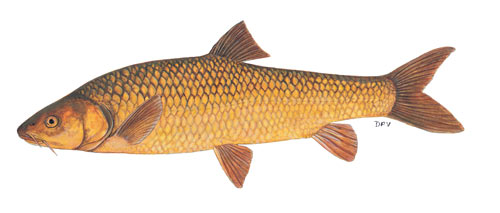 Clanwilliam Yellowfish Clanwilliam YellowfishLabeobarbus capensis | — | Olifants/Doring River system (WC) | 10.6kg / 98cm | 5.6kg |
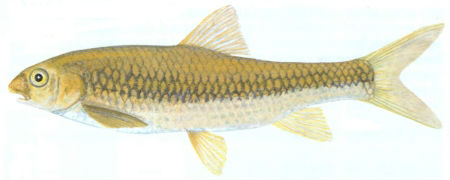 Incomati Chiselmouth Incomati ChiselmouthLabeobarbus nelspruitensis (since 2015) | Horingbek | Komati, Pongola, Sabie River systems (MP) | — | — |
Another 3 species are related and similar to yellowfish but not classified as such:
| Name | Other name | Location | Max size / length | SA record |
|---|---|---|---|---|
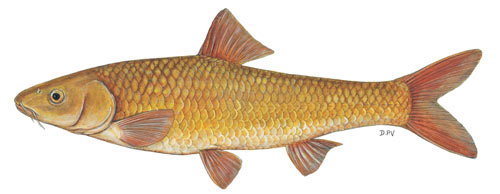 Berg/Breede River Whitefish Berg/Breede River WhitefishBarbus andrewi | Witvis | Berg/Breede River system (WC) | 7kg / 80cm | 3.4kg |
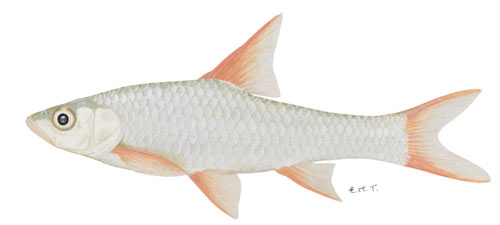 Bushveld Papermouth Bushveld PapermouthBarbus rapax | — | Limpopo, Elands, Crocodile, Komati, Pongola Rivers — basically north and east of South Africa | 1.3kg / 20cm | 1.3kg |
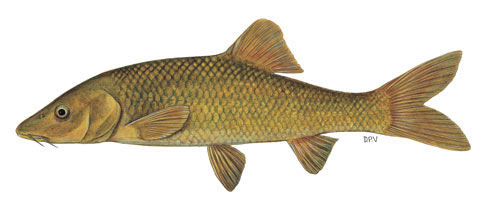 Clanwilliam Sawfin Clanwilliam SawfinBarbus serra | — | Olifants/Doring River system (WC) | 3kg / 60cm | 3kg |
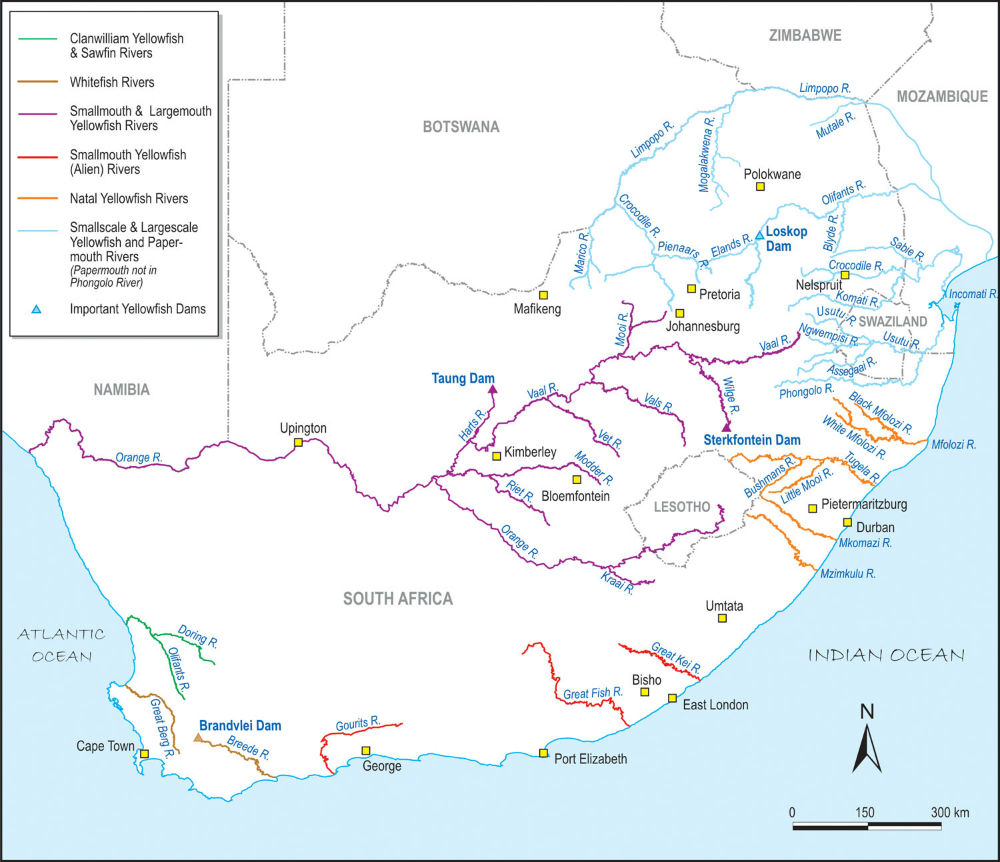
We found this fantastic map on the Federation of South African Flyfishers site, and it clearly illustrates where all the different yellowfish can be found.
Identification
So how do I identify my yellowfish?
Well, after spending some time trawling through forums etc., we found that by asking the following questions we can easily distinguish between the different types of yellowfish.
1. Where was it caught?
Just looking at the table and map above, it's clear that we can discard quite a few species by just determining where it was caught. So here goes:
| Where was it caught? | Possible type of yellowfish |
|---|---|
| Vaal, Orange Rivers | can almost only be a Smallmouth or Largemouth |
| Limpopo, Pongola, Sabie, Komati etc. Rivers (northeast of SA) | almost certainly a Bushveld Smallscale or Lowveld Largescale, but can also be a Smallmouth, a Papermouth, or even an Incomati Chiselmouth |
| Smaller rivers in KZN flowing to the Indian Ocean | can only be a KwaZulu-Natal Yellowfish |
| Kei, Gouritz, Great Fish Rivers | can only be a Smallmouth |
| Berg, Breede Rivers in WC | definitely a Whitefish |
| Olifants, Doring Rivers in WC | either a Clanwilliam Yellowfish or a Sawfin |
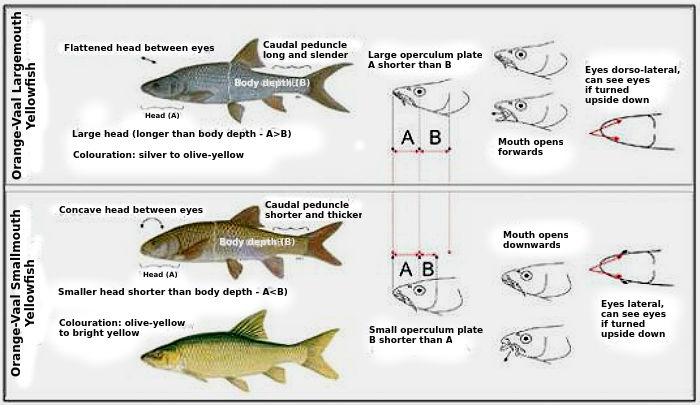
2. Smallmouth vs. largemouth
We've found there are two main ways of differentiating between these two common yellowfish, which occur in the same bodies of water.
a. Location of the eyes — turn your yellowfish on its back, and then try to see its eyes from the bottom. If you can see its eyes protruding on the sides of its head then it's a smallmouth. If you can't see the eyes it's probably a largemouth.
This is because the smallmouth yellowfish is predominantly a bottom feeder and needs to see food below it. Conversely, the largemouth is predominantly a hunter and generally looks upwards to spot prey.
b. Shape of mouth — gently press the bottom lip of the yellowfish down. If the mouth opens downwards it's a smallmouth. If its mouth opens mostly forwards it's a largemouth — for the same reasons as above.
c. Still can't tell? Have a look at the following graphic — we found it lying around in a forum and took the liberty of enhancing it to be more readable.
3. Smallscale vs. largescale
This one's a bit easier, and it's all around counting the number of scales they have (obviously), plus some other characteristics.
a. Lateral line scale count — largescale yellowfish generally have around 27-33 scales in the lateral line, whereas smallscales have around 36-44 scales.
b. Uppermost scale count — count the number of scales from the head to the dorsal fin. The largescale has around 8-9 scales; the smallscale has more than 10.
c. Fin colour — the largescale normally has bright orange fins, whereas the smallscale has a blueish tinge to its fins.
d. Body shape — largescales are normally bulkier than smallscales, which have a more streamlined body.
Note: please try not to keep the fish too long out of water while counting scales — rather take a photo and do the counting later.
4. Other?
For other types of yellowfish that inhabit the same bodies of water, we couldn't find any resources — for example the difference between smallmouth yellowfish, papermouth, and smallscale, or the difference between the Clanwilliam yellowfish and a sawfin. We'll continue looking for any info regarding those questions, and add more photos over time to simplify identification.
References
Further reading
Special thanks go out to these sites/organisations, whose research this guide draws on. They've put in a lot of effort to compile comprehensive detail on each type of yellowfish — click through to find out more about this fascinating fish.