
Overview
Why the bites sometimes dry up
All around the world, the common carp (Cyprinus carpio) is a very popular game fish. South Africa is no different. We have an abundance of carp venues all over the country and thousands of anglers try their luck on a daily basis.
Carp is also one of our favoured target species. We often do very well but sometimes we mysteriously get very few bites even though the conditions seem perfect. So we started reading up on carp behaviour and learnt a lot about these fascinating fish.
In this guide, we've tried to share all the knowledge we've gained from an angler's point of view. It's helped us, and hopefully there's something in here that'll help you too.
General
Habitat, spawning and diet
1. Habitat
We all know carp thrive in deeper freshwater lakes and dams — they're quite comfortable in rivers too, but prefer slower-moving water. But where exactly can they be found in the water column?
Carp have 4 basic requirements: food, warmth, oxygen, and shelter. They'll seek out areas that satisfy all of these, so we can assume the following:
Summer: oxygen levels are lower and the water is warmer, so carp will migrate to shallower areas where there's more oxygen.
Tip: look for areas of shelter if possible, and try to be on the windward shore (blowing towards you) — this is where the highest concentration of oxygen and food will be.
Winter: oxygen levels are higher but the water is colder, so carp will migrate to the deeper parts of the lake or dam, where the water will be warmer — this is of course still dependent on a food source.
Tip: try to identify the deeper areas and target those. Go fishing immediately if the temperature rises for a few days.
2. Spawning
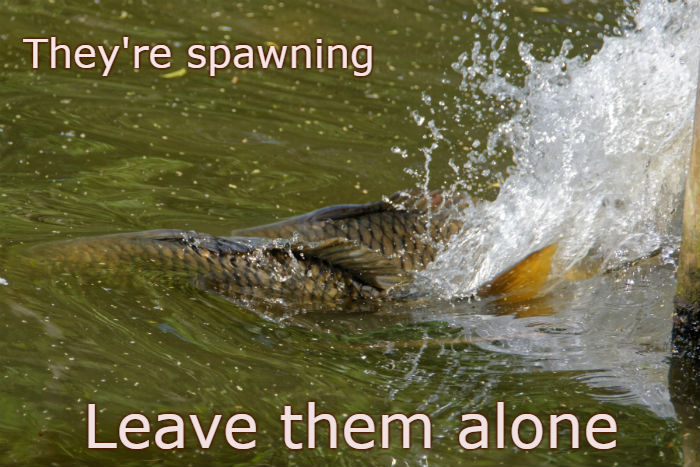
Carp spawn during spring to early summer (August–October), when the water temperature reaches between 16–20°C — this gives the young carp enough time to build up fat reserves before the next winter. Given ideal conditions, carp can even spawn multiple times per year.
You may have seen carp thrashing around among grass beds. Besides actual spawning activity, this serves to spread eggs around a certain area to increase the chances of survival.
Carp are generally not interested in feeding during the spawn. You may find some fish biting, but a lot less than before and after the spawn — it might be a good time to leave them be and not disturb the production of the next generation. Don't try to catch carp thrashing in shallow water among the grass — you won't be successful, and might do a lot of harm. You can still catch carp in the conventional areas, away from the spawning activity.
3. Detecting food
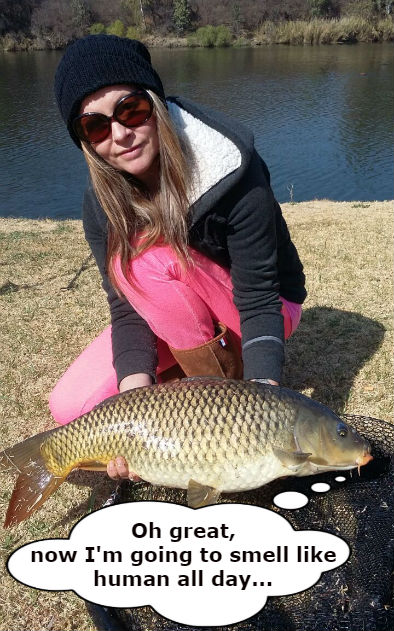
Carp have very good olfactory senses (their sense of smell) — they can detect any dissolved substances in the water and quickly determine if it's a good food source. They also have a very sensitive mouth lining, which quickly chemically senses whether food is good or bad.
4. Diet
Carp are omnivorous. They'll eat algae, soft plant roots, and of course all the baits we use (corn, tiger nuts, dough, etc.). But they're also after more animated prey, like aquatic snails, small crustaceans, maggots, and worms (blood or earth) — they'll even dig into silt to get to bloodworms.
Conditions
How weather and water shape a session
1. Water temperature
Water temperature has a profound effect on carp behaviour. Here's a summary of what we've learned — these numbers can differ depending on your climate:
- Below 8°C — at this temperature carp will hibernate in groups in deep water.
- 8–18°C — not great, but there should be some carp activity.
- 18–28°C — ideal water temperature for feeding carp.
- Above 28°C — carp might be distracted by low oxygen levels.
2. Wind
Wind is also very important. Carp will apparently follow the wind direction and congregate on the windward shoreline. Here are a few reasons why:
- Wind causes undercurrents that push food in the windward direction.
- It also stirs up food in shallower parts, and the carp know this.
- As small waves crash near the shore, it raises the oxygen levels, making carp more comfortable and more likely to feed.
3. Air pressure
Another important factor is the effect of air pressure on a fish's swim bladder. Here's how we understand it:
Low: air in the fish's swim bladder expands and causes discomfort. Carp tend to go deeper (more water pressure) or stop moving, and are less interested in feeding.
High: carp feel more comfortable, become more active, and feed on more animated things.
4. Rain
Rain is always a good thing — it increases the oxygen in the water, which makes carp more active and excited about feeding. In warm conditions, rain will also cool the water, which leads to more activity too.
5. Oxygen
Carp are very adaptable and can survive in low-oxygen water (0.3–0.5mg/l), but ideally, as with most fish, they prefer oxygen-rich waters. We've noticed that when there's a lot of boating activity (e.g. Bronkhorstspruit Dam) we tend to get many more bites — the boats probably annoy the fish, but they also deposit a lot of oxygen in the water, causing more feeding activity.
Carp gulping for air at the surface often means there's little oxygen in the water — a very bad sign.
6. The moon
As far as we can tell, the moon has no effect on carp behaviour. Solunar tables mostly pertain to tides, which obviously don't apply to regular inland lakes.
Behaviour
Reading what carp do on the surface
Carp often come to the surface, and depending on their behaviour you can tell a lot about their current mood. Here's what we know so far:
1. Jumping and flopping on their sides
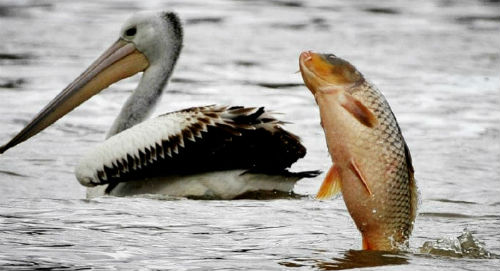
What it means: the carp is possibly trying to deflate its swim bladder — most likely because it's feeding very deep and needs to get rid of the excess gas as it rises. This behaviour is mostly seen in larger, deeper lakes; in shallower water, carp wouldn't need to do this, and the jumping has a different purpose, like clearing silt/parasites from their gills.
Tactic: casting where you see fish is always a good tactic, but in our experience this behaviour wasn't always a good sign — possibly because the air pressure is low and their swim bladders have enlarged to become uncomfortable.
2. Jumping straight up and down, head and shouldering
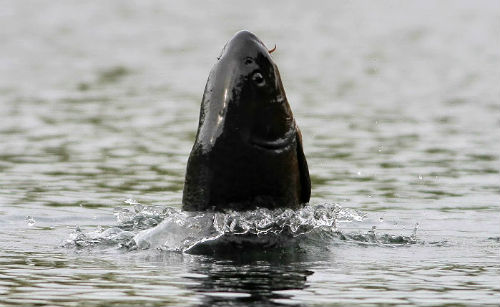
What it means: the carp is trying to either force more air into its swim bladder, or get rid of excess particles/parasites/silt in its gills or mouth. This almost always means it's feeding right there in silt/mud to get food.
Tactic: this is usually a very good sign, and almost definitely means the carp are feeding there — try to get your bait in the exact area where this activity is happening.
3. Porpoising (dolphin style)
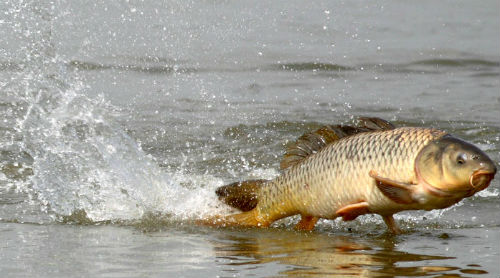
What it means: this is more of a social behaviour — it probably means there's a school of carp moving together in a certain direction.
Tactic: try to spot this behaviour coming towards you by looking for more than one carp doing this, then try to cast in their path to intercept the feeding school — this can be very lucrative if done correctly. Otherwise, throwing a Zig rig in their general path could be effective too.
4. Thrashing / milling on the surface
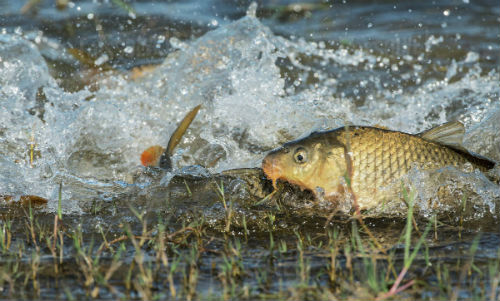
What it means: the carp are most likely spawning, especially if this behaviour is spotted among grass beds.
Tactic: don't bother these carp — they have other things on their mind, and feeding isn't one of them. Rather try your luck in conventional areas.
5. Gulping at the surface
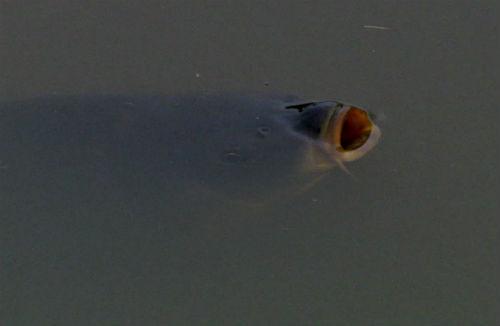
What it means: there's too little oxygen in the water, and the carp are forced to gulp at the surface.
Tactic: not a good sign — a Zig rig might be your best option.
6. Lazily lying under the surface
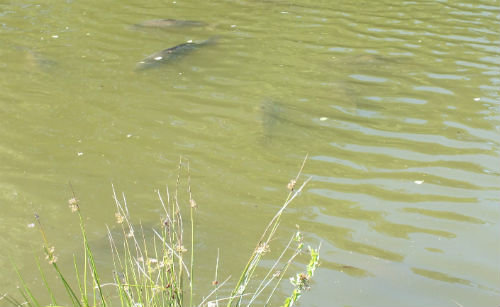
What it means: the carp are resting, restoring energy levels. In summer they'll rest at the surface (also known as basking); in winter they'll rest on the bottom, unless there are low oxygen levels.
Tactic: ignore these carp — cast in conventional areas instead.
Summary
Still learning
That's it — all our combined wisdom from reading and summarising a dozen similar posts. If you have any further info that could be useful, or would like to dispute any of the information, please feel free to contact us. We're constantly learning, and any contributions are very welcome.
For a very comprehensive article covering everything else you need to know about carp fishing, see Ontrack Fishing's carp fishing tips.